





Shekha Nasser: Building the Future of « Made in Africa » Beauty Franchises from Tanzania
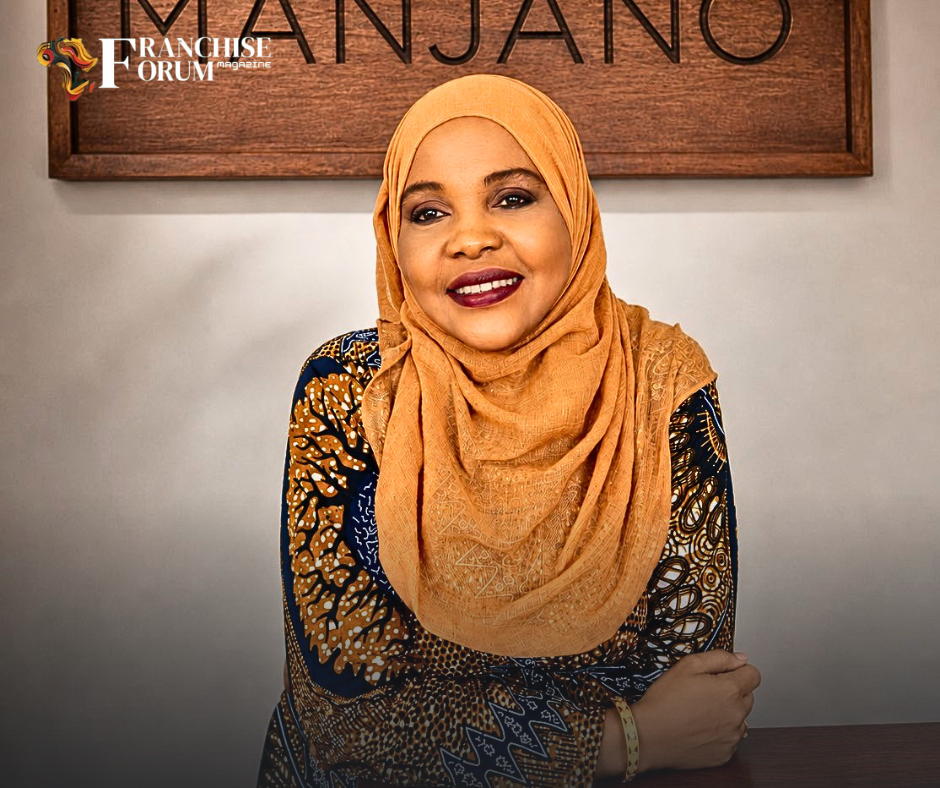
In this special edition of Africa Franchise Forum Magazine, dedicated to the pioneering women redefining the franchise ecosystem in Africa, we shine a spotlight on the inspiring journey of Shekha Nasser. As the Founder and CEO of Shear Illusions Ltd and a beneficiary of the AfDB-funded AFRAP program in Tanzania, she embodies the successful transition from a local vision to a structured, scalable, and continent-ready franchise model.
From importing cosmetics to establishing Zanzibar’s first fresh handmade cosmetics factory, Shekha Nasser shares her candid insights on market challenges, the power of the « Made in Africa » brand, and her bold vision for women entrepreneurs across the continent.
Q1 – Tell us the story behind Shear Illusions.
My entrepreneurial journey started in 2005 through a retail business importing cosmetics into Tanzania. At that time, I observed that African women loved beauty products, but the market was dominated by imported brands that rarely understood African skin, hair textures, climate, or beauty identity. I realized there was a huge gap between what African women truly needed and what was available.
In 2015, I launched Tanzania’s first Makeup Line called LuvTouch Manjano. Initially, manufacturing was outsourced to China because there were very limited cosmetic manufacturing opportunities locally. However, even while importing, my dream was never simply to become a distributor. My vision was always bigger — to create authentic African beauty products manufactured by Africans, for Africans, and eventually for the world.
In 2017, I began planning the foundation of my own cosmetics factory in Zanzibar. In November 2021, that vision became reality when I officially launched Zanzibar’s Fresh Handmade Cosmetics Factory, with the President of Zanzibar, Hon. Dr. Hussein Ali Mwinyi, as the guest of honor. What convinced me was that a real market was not only customer demand, but also customer emotion. Women wanted products that reflected their identity, their culture, their indigenous therapeutic traditions, their native botanical ingredients, their skin, and their natural beauty journey.
Q2 – What differentiated Shear Illusions from other players in the sector?
From the beginning, Shear Illusions focused on authenticity, education, and premium African beauty experiences. We focused on natural beauty solutions adapted to African consumers while also positioning the brand professionally and aspirationally.
We combined beauty, wellness, hair care, skin care, and education into one ecosystem. Another important difference was branding and storytelling. We wanted customers to feel proud using locally created products while educating them about ingredients, skincare, natural hair care, and self-confidence.
Q3 – Before AFRAP, how did Shear Illusions operate?
Before AFRAP, our operations were largely founder-driven. I was handling multiple roles simultaneously — product development, customer service, staff management, purchasing, marketing, production oversight, and business expansion decisions.
The business had passion and vision, but systems were still developing. Our internal processes were focused on complete creative control and financial independence. Our biggest vulnerability was scalability. AFRAP helped us understand that a business cannot become franchise-ready if it depends entirely on the founder’s physical presence every day.
Q4 – What does it mean to be both CEO and Founder in Tanzania?
Being both Founder and CEO means carrying both the dream and the responsibility at the same time. In Tanzania and many African countries, women entrepreneurs still face infrastructure challenges, limited financing opportunities, and limited manufacturing support systems. Wearing both hats makes me in charge of operations and systems, meaning designing all day operation, products, marketing and management workflows — which means as the owner I can revolve, rebrand or change the direction of the business any time.
For me, it has meant resilience, adaptability, and continuous learning. It also means becoming an example for other women who want to enter industries where few women have built scalable brands before.
Q5 – How did you first hear about AFRAP?
I was first invited via email, by the Tanzania Private Sector Federation (TPSF) to the launch of the Africa Franchising Accelerator Project (AFRAP) funded by the African Development Bank on 15th November 2021.
What convinced me to join was the programme’s long-term approach. AFRAP focused on transforming businesses into structured, franchise-ready enterprises through mentorship, systems development, training, and strategic thinking.
Q6 – What specific skills did AFRAP give you?
AFRAP transformed my understanding of franchise business management. The programme strengthened my skills in human resources management, operational systems, franchising structures, financial management, customer relationship systems, business planning, and leadership.
One major lesson was learning how to build systems that continue functioning even when the founder is not physically present, understanding that a franchise business follows a strict existing operational manual, supply chain, and standardized blueprint.
Q7 – Was international expansion part of your original plan?
My long-term dream was always international, but I did not expect global visibility to happen so quickly. AFRAP helped us establish stronger digital visibility, including our website and business positioning, including opening our MANJANO Franchise pilot model in three tourist hotels in Zanzibar. This unexpectedly opened doors to customers from the Middle East and Europe.
Receiving international inquiries taught me that African natural beauty products already have global demand.
Q8 – What made AFRAP different from other SME programmes?
What made AFRAP different was its practical and transformational approach. The programme focused on structure, systems, franchising readiness, and long-term sustainability. For example, when we leaped into establishing our first franchise pilot model, we received coaching and encouragement in several elements such as standardization of all operating procedures, systems, and manuals, including brand synergy.
All this was to help us document and test the in-hotel franchise model to operate perfectly as a proof-of-concept. Opening our second and third in-hotel MANJANO Franchise has been due to the successful trial model.
Q9 – What is your relationship with FATA today?
My relationship with the franchise ecosystem in Tanzania became even more meaningful when I was officially appointed in February 2025 as one of the founding members of the new Tanzania Franchise Association (FATA), formed under the AFRAP initiative implemented by TPSF. I was honored to be selected among the founding members representing Zanzibar and women-owned businesses within the AFRAP programme.
For me, this appointment was not only recognition of my entrepreneurial journey with Shear Illusions, but also recognition of the importance of women entrepreneurs participating in shaping the future of franchising policy, standards, and ecosystem development in Tanzania. FATA represents an important step in organizing the franchising ecosystem, helping women entrepreneurs move from operating isolated businesses into becoming part of a structured national and continental business ecosystem.
Q10 – Is franchising an explicit objective for Shear Illusions?
Yes, absolutely. Franchising is now part of our long-term strategic vision. Shear Illusions is naturally suited for franchising because beauty, wellness, hair care, training, and retail can be standardized through systems and operational procedures. Our vision is to eventually develop franchise-ready beauty and wellness outlets across Tanzania and East Africa.
Q11 – What makes your products unique internationally?
Our products combine African authenticity, powered by indigenous tropical botanicals, ocean wild-harvested seaweed, and handcrafted care meeting organic beauty. Zanzibar itself carries a strong global identity associated with spices, wellness, and heritage. Every product is thoughtfully handmade to deliver luxurious care inspired by the richness of the earth and sea. The “Made in Africa” story is becoming a premium identity in global beauty markets.
Q12 – What obstacles hold back franchising in East Africa?
From my perspective, there are three major obstacles slowing franchise development in East Africa:
- Consumer perception and brand trust: Many consumers in East Africa still believe imported brands automatically have higher quality. Genuine African manufacturers must work twice as hard to build trust, educate consumers, and prove that locally made products can meet international standards.
- Limited culture and understanding of franchising: Unlike South Africa, where franchising has been established for decades, East Africa is still in the early stages of building that ecosystem. Many SMEs operate informally without documented systems, operational manuals, or legal frameworks necessary for franchising.
- Access to financing and industrial infrastructure: Many East African SMEs — especially women-owned businesses — struggle to access patient capital. High-interest commercial loans often trap businesses in survival mode, limiting their ability to reinvest in equipment, staffing, innovation, and expansion.
Despite these challenges, I strongly believe East Africa is one of the next major growth frontiers for African franchising, with a regional market expanded to over 300 million people.
Q13 – What could recognition through AFCAA represent?
Recognition through pan-African platforms like AFCAA would create visibility, attract partnerships, and strengthen confidence in African women-led brands. It would also inspire other women entrepreneurs to believe that African brands can compete continentally and globally.
Q14 – What is still missing from these initiatives?
More outreach is needed beyond major cities and conference spaces. Many talented women entrepreneurs in secondary towns and informal sectors still do not know these opportunities exist. What is missing most is accessibility — financial, geographical, digital, and language accessibility.
Q15 – What can visibility in AFF Magazine change?
Visibility in a pan-African publication like Africa Franchise Forum Magazine can open new markets, partnerships, and strategic networks. Most importantly, it validates the journey of African women entrepreneurs and inspires others across the continent.
Q16 – What would accelerate African beauty franchising?
Africa already has the raw materials, market demand, beauty culture, and entrepreneurial talent. What we need now is structure, manufacturing investment, branding confidence, and continental collaboration. Africa should not remain only a supplier of raw materials — we must also own the brands, factories, franchises, and value chains.
Q17 – What has this journey taught you about yourself?
This journey taught me that vision can survive uncertainty. I learned that entrepreneurs sometimes must build not only the business, but also the environment that allows the business to exist. I also learned that leadership requires courage before confidence.
Final message to African women entrepreneurs:
« To every African woman selling beauty products from home, from a salon, or from a small shop — do not underestimate the power of your product simply because it started small. Franchising is not only for multinational companies. African women can build scalable African brands too. Programmes like AFRAP prove that when women receive structure, training, visibility, and opportunity, they can transform local businesses into continental brands. »